I love using tic-tac-toe and bingo format games with the kiddos. They don't even mind that I never give out prizes for winners, haha (so cheap).
They are a really great opportunity for students to practice ear-training and for me to assess who can read the patterns and who can't.
I usually follow these steps when I use such activities (I'm huge into getting the most I can out of anything we do, especially if it takes me forever to create and/or assemble):
Prep: Students sing each pattern on solfa as a whole class. I make sure the students know where each solfa is living. Students sometimes play individually and sometimes with a partner.
Level 1: I sing a pattern on solfa three times. After the third repeat, I announce the correct number so students can check their work (while I'm singing, I'm walking around and watch the students to see who quickly covers the correct answer, who covers the correct answer after subsequent repeats of the patterns, and who doesn't cover a pattern or covers the wrong pattern). Sometimes we get a tic-tac-toe or bingo at the same time, but it doesn't matter to the kiddos. After about three or four repeats of this level, we move on.
Level 2: This level is the same as level one, only I sing the solfa on a neutral syllable. The students will have to label the solfa themselves using their ears, and then find the correct pattern.
Level 3: For this level, I only play the pattern (usually on the piano or recorder).
Extensions: Students love to volunteer to sing a pattern for the class. This can be a bit nerve-wracking for some of them, so I usually only take volunteers. If they mess up or fail to sing on the correct pitch, often the class isn't sure what pattern to pick, so the students (especially the performers) realize how important musical accuracy is. Depending on the solfa we're using, students also enjoy playing patterns on the instruments. They can do this with a partner, with one student playing the pattern and the other trying to find it on the game-board. If the bingo board has a "free space" the students can take turns creating the "free space" pattern (which I write on the board for all to see). Only if and when I sing that pattern can the students now cover the "free space".
Try these steps out for yourself. You'll find my "Mi So La Tic-Tac-Toe" game on my TPT store as my latest freebie (click the picture below). Enjoy!
My 2nd graders are about ready to add in "do". This will be one of the last strictly "mi-so-la" activities that I have them complete - so I packed with everything I could think of to enhance their learning. (Note: Although I do frequently create songs for my students to use, the folk songs I use to teach them far outnumber anything I create - as it should be).
The song is called "The Mayflower". I've included the music, feel free to use it. At my Teachers Pay Teachers store (click on the picture below to check it out), you'll find a thorough lessons with visuals, printables, movement ideas, assessment ideas, instrumentation, and more.
I'm really excited to use a few printables I created. This is a great way for me to assess the students in a way that is fun for them.
First, I'll give the students their Mayflower cards. The students will:
1) chant the rhythm of each card
2) chant the solfa of each card in rhythm
3) sing the solfa of each card on pitch
4) locate a card I sing or play on a pitched instrument
5) locate a card their classmate sings or plays
Then, the students will match the Pilgrim cards to the Mayflower cards. Once these are correctly matched, I'll collect the Mayflower cards. Then, the students will:
1) chant the rhythm of each card
2) chant the solfa of each card in rhythm
3) sing the solfa of each card on pitch
4) locate a card I sing or play on a pitched instrument
5) locate a card their classmate sings or plays
To extend this, students can:
1) Create their own two to four beat measure phrases by arranging the cards in order
2) Play the cards on a pitched instrument
3) A moveable match game - students will be given either a pilgrim or a mayflower card and will have to search for a student that has their matching card
4) Memory matching game with a partner (put cards face down, if they draw a match, they keep the pair and play again, if not, their partner takes a turn, whoever has the most cards at the end is the winner)
My 2nd graders will also be busy with Turkey, Turkey (another mi-so-la activity).
This song is one of those that just "keeps on giving." I started using it as a piece to practice using our four voices, but eventually it evolved into teaching everything from adding instrumentation that connects to the text to solfa (mi so la).
In kindergarten, the students first learn the words as a speech piece. I used to use a poster to illustrate the song, but this year I used PowerPoint instead. I use the first few slides with the text and pictures to help students understand the lyrics of the song.
After that, the students add four voices to the lyrics. We talk about which parts match which voice (for example, "Crying at the locks" - we'd use our loud voice).
Next, we play a favorite little game. Students love the movement, and they love trying to "sneak" opening their eyes when "Willie" comes to get them. Usually, I reserve the role of "Willie" for myself, that way the students can't argue "But I had my eyes closed." Sometimes, I'll give the role to another student, or ask for "helpers" and they'll play with me. Either way, it is always a favorite.
For the next lesson, the kinder students add instrumentation based on connections to the text. This prepares them for doing so later with longer stories and books. It also exposes them to a variety of instruments that we'll use regularly in kinder.
We also discuss the steady beat of the song and keep it in a variety of ways while tracking the "door" icons:
This year, with my current first graders, we will extend the learning to include:
Rhythm Icons
Rhythm Symbols
Organizational Tools
The students will also add pitches to the song (which can be played on boomwhackers since it is in C major):
Melodic Icons - can use with younger students to prepare mi so la
Melodic Icons on the Staff
Melodic Icons with Solfa (off the staff is also included, along with slides for introducing la
correct rhythmic notation on the staff
All together now!
You can download the PowerPoint here. I've included lots of tips and suggestions for teaching in the "notes" section of most of the slides. I hope your kiddos enjoy this song too!
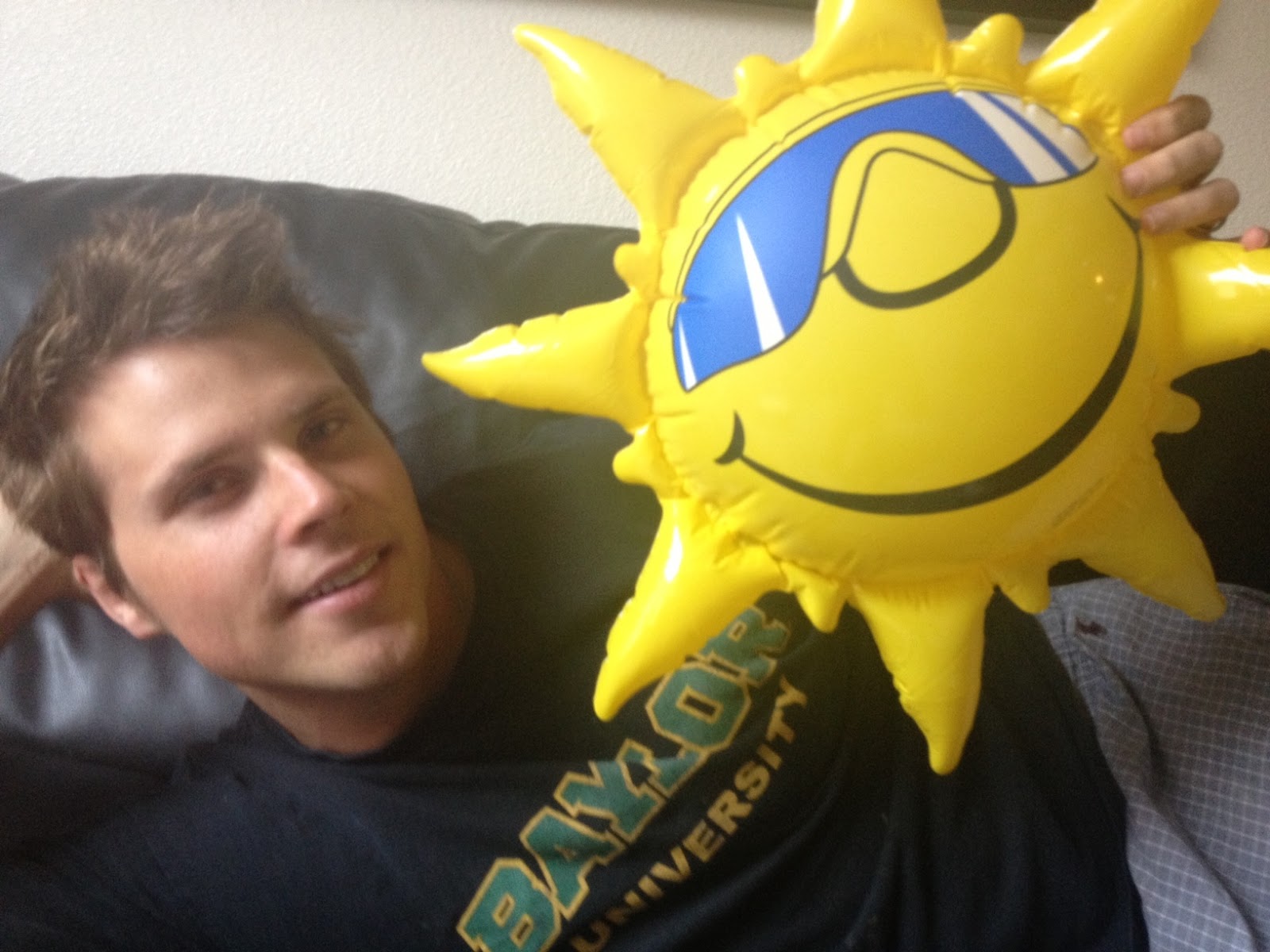
My husband came across this cute little sun at Dollar Tree. He said, "You could have the kids sing higher when the sun rises and lower when the sun sets." Clearly, he's been shopping with me so often that he knows what to look for.
Of course, Mr. Sun will come out when we sing and dance to "Mr. Sun" (Mister Sun, Sun, Mister Golden Sun, please shine down on me, etc). I used the song in a program two years ago and had costumes made (sun, tree, etc) so we always like to sing and act out that song. Here's the movements we use: Mister Sun, Sun, Mister Golden Sun: The "sun" walks out in front of the audience with three or four students trailing behind him/her. Please shine down on me: The sun stops and the students surround him/her, kneeling and pleading (hands clasped together). Oh Mister Sun, Sun, Mister Golden Sun: The sun walks backwards with the students following to the side of him/her. Hiding behind a tree: The sun walks behind the "tree". These little children are asking you to please come out so we can play with you: The students near the sun stand with their hands on their hips while the tree acts out singing these words. Oh Mister Sun, Sun, Mister Golden Sun: The "sun" walks out from behind the tree with the students trailing behind him/her. Please shine down on me: The sun stops and the students surround him/her, kneeling and pleading (hands clasped together).
The sun says, "OK"
As a partner song for that performance, I used "Sol, Solecito" an easy mi-so-la song in Spanish. There are some versions of the song on Youtube, but each one I checked out had horrid quality (singing, video, the whole bit). I'd suggest Googling it if you're not confident singing in Spanish for your own reference.
You can download the slides free on my TPT store, but I'd suggest reading through the post for more tips about teaching the song and incorporating a listening activity ;)
Kiddos can use this slide as a vocal exploration exercise (make sure they are singing Mi-So-La correctly in a key of your choice - C and D are used in the song) - they can sing on "sun" or a neutral syllable
Some students can even hold up the plastic sun in front of the others in the front of the room to lead the class.
Here are the lyrics of the song on the steady beat page (note - the English translation is not intended to be used, use the Spanish):
There's also a rhythm icon and rhythm slides.
The melodic icons look like this (plain). Try having the students tap their heads for "la", shoulders for "so" and tummies for "mi".
Melody Icons
Melody Icons without La
Melody Icons with La
Melody on Staff (C Major - lines)
Melody on Staff - D Major - Spaces
Once the song is learned, put the students in a circle. Someone in the middle can hold the sun (eyes closed, sun above their head) while the students walk around (holding hands) the circle. When the song ends, the person in the middle tosses the sun at the circle. Whoever is hit becomes the new sun.
A great piece to add a listening element to these sun songs is "Morning Song" from the William Tell Overture.
I don't know about your kiddos, but my little ones love listening exercises. 85% of them automatically start moving around without any direction from me (which is often times the goal as I'm observing them) but some look to me for direction/ideas/etc. Which is why, unless I'm doing a Dalcroze exercise or something specific where I don't want to help them, I usually structure listening exercises in this manner:
"Blind" Listening: Play a short (30 seconds or so) excerpt of the piece. Ask the students to describe it, tell you what it is about, make a connection (I heard this song when...). Often, I will ask them to listen for something specific (an instrument, a dynamic or tempo change, a "B" section, etc). It is so important to give them something to listen to in order to capture their attention and focus. Sometimes, I'll say, "What do you think I want you to listen for?" and play the piece (obviously after many listening examples) - what a great way to get kids listening critically. For this piece, I'll discuss the English Horn (which happens to be an instrument I can play and my favorite woodwind) and discuss the tempo of the song (with little ones, you may just be saying "slow" instead of discussing musical dynamic terms):
"Guided" Listening: I use a listening map, PowerPoint, rhythms taken from the song, structured non-locomotor movement or instrument activity, as we listen a second time - for this particular song: let students watch the following Youtube video to get their creative
juices flowing:
"Movement" Listening: I create, or have them create, or borrow from a textbook, resource, or video, a movement for students to use while they listen. For this song: Have the students create their own movement when you play
the piece again. I think this year I'll be the "sun" and carry around
our plastic friend while the other students follow behind as the
"clouds" carrying blue scarves. Students are creating their own movement but they have me and my movements for a frame or reference. Students should be moving slowly, with long, legato movements (sweeping arms, small twirls, etc).
"Critical" Listening: By now, the students have heard the piece multiple times and it is time for either an assessment or critical discussion. For this piece, I ask the students to identify what other instrument they hear "talking" with the English Horn (the flute). We discuss the different "timbres" of the instruments. We can even take a vote on which instrument students prefer (although English Horn usually wins for us, haha).
I hope you have a sunny time with these activities ;)
I recently wrapped up my Recorder Karate unit with 3rd - 5th grade. We had a recorder number of Black Belts this year and the students worked very hard. One thing I did this year that I hadn't in previous years was to create a bulletin board like this (obviously taken toward the beginning - I ended up putting a picture of each black belt in the red free space) in addition to announcing the students' names on our morning announcements:
It looked very cute, if a little cluttered, with so many smiling black belt faces adorning it. The motivation was great and I got to thinking, "What if the students had something motivating to use when learning solfa?" All my kiddos are eager sight-singers, and many will often show their skills in front of the class, but having a reward-system in place can't hurt right? I could always use more data and more assessment opportunities also! So, I created the Solfa Dojo!
WHAT IS THE SOLFA DOJO? I borrowed the progression of 'belts' from Karate and adapted it for the Kodaly classroom. The melodies of the "belts" mirror melodic structures from various songs the students already learn as we progress from Mi-So to Mi-So-La and to Do-Mi-So-La. Vital rhythms for these levels are also included in the "belts". The melodies use the keys of C, D, F and Gso students can sing at higher and lower levels and view the solfa on various places on the staff. Level 1: 9 melodies using so/mi, quarter note/eighth note pair Level 2: 9 melodies using mi/so/la, quarter note/quarter rest/eighth note pair Level3: 9 melodies using do/mi/so/la, half note/quarter note/quarter rest/eighth note pair Level 4 (updated 07/30): 9 melodies using do/re/mi/so/la, half note/quarter note/quarter rest/eighth note pair
HOW ARE STUDENTS ASSESSED? Students are assessed using the following rubric (which you can go over with the students and it is also included in the music you can send home for them to practice). Each "song" has 8 total beats. You can address time signature, measures, bar lines, and double bar lines also.
Students also receive and overview of which concepts are used in each level and a reminder about what steps to use when singing:
HOW CAN I USE THE MATERIALS? You can use the materials in a variety of ways (and feel free to adapt what you need to for your own students' needs):
1. Individual
sight-reading: Use this progressive assessment alongside your traditional Mi/So, Mi/So/La, or Do/Mi/So/La lessons (check out the links to the right for more information). You can use it as you
progress through different keys or songs.
During part of the lesson, while students are engaged in center
activities, etc, call students over to your desk and have them follow the
sight-reading steps (don’t allow them prior practice time).
2.Individual
or Small Group Study: Equip each student (or small groups of students – 3 to 4)
with a set of the songs. You can print these out on cardstock, laminate or put in page pprotectors, and clasp with binder rings or store in a binder.
Red Belt Example Level 3
Students can
either work alone in their groups, with a partner, or with the entire group to
sing through the songs. Have a melodic
instrument ready so they can play the starting pitches since these change. You can call groups or individual students to
sing for you to “pass off” a belt. You can even send home music for the students to practice:
Example of Level 2 Printable Music
3.Whole-class
Study: You can project the slides for the class to sing (they can compete
against other classes in their grade level).
Have them follow the sight-reading steps. If they score high enough, you can select a
student to color the belt on their class tracking sheet. If not, they can earn a chance to perform
again later.
HOW IS PROGRESS TRACKED?
Included in each download are printable book-mark sized blank "belts". I suggest having two per each student, one in a binder where you record which level they earn (highlight or check off each belt) and one on a bulletin board that the student can color in (if they color, you don't have to worry about finding time to do it yourself). If you are tracking their progress as a class, you can put their homeroom teacher's name on the tracking sheet instead.
WHAT REWARDS CAN I USE?
For most students, the progression on the bulletin board will be enough.
However, some more ideas for rewards are:
1. Class with the most black belts (or class that first reaches the black belt level if you are assessing the class as a whole) earns a music game day (students can play favorite music games).
2. Each students who earns a black belt gets a certificate, their name on the announcements, and their picture on the bulletin board.
3. When the unit is over, place all the black belt names in a drawing, and the "winners" (you can select how many you want) can receive music prizes (you can decided what those are - for example, these cute, but durable inflatable mics):
Students love both of these songs - why I never put them together - who knows! They are really fun games for students to revisit later when they learn "Bow Wow Wow" also - so they are great for 2nd graders at the beginning of the year or 1st graders toward the end.
Beforehand (or in subsequent lessons) students can play the "Help the dog find all his bones" game. There is a rhythm version. Try chanting on "doggie" and "bone" then on "ta" and "titi":
And a melodic version:
First, we learn the song, "Doggie, Doggie" - I love the game that goes
with this and it also gives students the opportunity to sing alone.
I've used paper plates that I had drawn doggies (titi) and bones (ta) on
for use in decoding the rhythm of the song. I also like that this song
gives me the opportunity to discuss what a 'slur' is.
I "chunk" the song into two lessons - one where we learn the rhythms (and then do other things) and one where we complete the rhythm activity, learn the melody and play the game. We play the game again in another lesson and we also learn the rhythms for "Red Rover".
Here are some slides from "Doggie, Doggie":
And some printables:
Here are some slides for "Red Rover":
And the printables (I like to re-use lots of them by placing them in plastic page protectors and having the students dry erase markers):
For the game with "Red Rover" - I don't use the conventional one. I mean, ouch! For this version, the students sit in two lines. One student on each "team" is the "team captain". Team A goes first, singing the song. Instead of singing Sally, they decide on someone on the opposing team and sing their name. Then, the "team captain" tells that person which pattern they will have to identify (speaking voice) or sing (singing voice). If the person selected does so correctly, they stay on their team. If not, they join the other team. The team with the most people (usually we run out of time - but you can play until all patterns are used) wins.
Here's an example of the patterns (in D major like the songs). I also included other ideas for use:
If you already downloaded my updated Mi So La bundle, you'll find these activities included there.
You can also purchase the set of lessons and activities separately at my TPT store.


.png)
.png)
.png)
.png)
.png)
.png)
.png)
.png)
.png)
.png)
.png)
.png)
.png)
.png)
.png)
.png)

.png)
.png)
.png)
.png)
.png)
.png)


.png)
.png)
.png)
.bmp)
.bmp)
.bmp)

.png)
.png)


.png)
.png)
.png)
.png)
.png)
.png)
.png)
.png)
.png)
.png)
.png)
.png)
.png)
.png)
.png)
.png)
.png)
.png)
.png)
.png)