UPDATE: Hello everyone! I have been at a new school with nearly 3x the students! Eek! Interactive notebooks haven't been feasible here, so I haven't been keeping up with them. I do have some of the things I've use available for free (see the links below) and I'm working on uploading more!
https://www.teacherspayteachers.com/Product/Music-Interactive-Notebook-Pages-Rhythms-475383
https://www.teacherspayteachers.com/Product/Music-Interactive-Notebook-Pages-Dynamics-Tempos-Articulations-424104
I know that a few of you are on the "interactive notebook" journey with me. I haven't been "journey-ing" very well in October, because, well, Halloween songs and activities are my absolute favorite and my students and have been busy!
However, I'm hoping to get these updates into my students' notebooks ASAP. Check them out!
This easy foldable can be used for logging "new rhythms". The rhythm is drawn in the middle. The flaps read: "real name", "word with same number of sounds", "number of sounds", "number of beats". You can see below how I answered these for "tika-tika".
Here's another rhythm foldable - this one is cross-curricular. Check-out how the kiddos have to identify the rhythm and then create a bar-graph:
Isn't it convenient that the lines on the music staff equal the number of fingers on the human hand? :)
I can't wait to add this little picture in as we go over absolute pitch:
The foldables are for basic listening vocabulary words. I'm thinking about introducing one type (say "tempo") per lesson, paired with interesting listening examples (I love Eric Chapelle's "A Tale of Two Cities" for loud vs. quiet - Half the class is the "loud city" and they stomp around the room with big movements, the other half is the "quiet city" and they tip-toe around with small movements - lots of fun for any age). After we listen or move to some of the terms, the students can complete their notebook pages (see below). The students can find the answers on various posters, anchor charts, etc around the room.
Now, anytime we listen to a piece, the students can uses these pages as a reference. I think this will be very engaging because they'll get to flip into their own work, check out pictures, and read what they wrote as the definition.
I'm literally slapping myself for not thinking of these pages sooner. My 4th graders are going to an orchestral concert on Thursday, so I've been very busy with them reviewing the instruments of the orchestra. We used a few charts in our notebooks already to log in notes about each instrument, but, had I had these printables glued in for them to use, I think their work would have been much better organized (and the pictures can't hurt either). I'll definitely be using these with my 3rd and 5th graders.
I'd suggest teaching one family per lesson (I love to use SFS Kids when teaching the instruments). Students can take notes under each flap and add extras (such as other family members, playing techniques, etc) around the edges of the foldable. Supplement their note-taking with discussions and video-clips from Youtube.
Looking for more instruments of the orchestra activities? Check out these FREEBIES from my TPT store:
Brass Family Matching Game
Woodwind Family Matching Game
Percussion Family Matching Game
String Family Matching Game
Turkey Instrument Family Game
How are your notebooks going?
Showing posts with label Intermediate Students. Show all posts
Sunday, November 10, 2013
Sunday, September 15, 2013
Old Mrs. Witch
Ok, one of my favorite things to do during Halloween is dance around to "Flight of the Valkeries" (I'm sure Wagner is rolling in his grave). Usually, we pretend to be bats or owls or something spooky that flies. Everyone from Kinder - 5th loves this activity, but probably not as much as I do. This is purely for fun, although older students can answer specific questions about the tempo, dynamic level, and instruments that they hear.
I only play the song for about 45-60 seconds. We begin by unfolding our wings and stretching them out slowly. Then, we flap our wings to mimic the movement of the strings. Finally, when the brass enters with the main theme, we "take-off" and fly around.
I do a lot of crazy movement in my classroom, but the students are wonderful at following all the expectations (such as where we can fly and where we can't, how to avoid hurting others, the speeds and ways our bodys can move, what to do when the music stops, etc). Define and set your parameters and you won't regret it.
This year, I think I'll pair the song (at least for my older students) with "Old Mrs. Witch" as we practice low la. The slides for this song have now been added to my Fall into Music bundle. I have included the slides here in case you'd like to use them.
I've also written orff parts for the metallophones and glocks - I love their sound with this song (that's only included in the bundle though).
I only play the song for about 45-60 seconds. We begin by unfolding our wings and stretching them out slowly. Then, we flap our wings to mimic the movement of the strings. Finally, when the brass enters with the main theme, we "take-off" and fly around.
I do a lot of crazy movement in my classroom, but the students are wonderful at following all the expectations (such as where we can fly and where we can't, how to avoid hurting others, the speeds and ways our bodys can move, what to do when the music stops, etc). Define and set your parameters and you won't regret it.
This year, I think I'll pair the song (at least for my older students) with "Old Mrs. Witch" as we practice low la. The slides for this song have now been added to my Fall into Music bundle. I have included the slides here in case you'd like to use them.
I've also written orff parts for the metallophones and glocks - I love their sound with this song (that's only included in the bundle though).
BONES!
With Halloween on the way, I'm totally in the Autumn-mode. Here are some skeleton/bone/ghost songs that I love (and none of them mention "Halloween", in case you have students that don't celebrate):
First of all, there's my personal favorite, "The Ghost of John" by Martha Grubb. I use it every Halloween and the kids love the spooky melody. Last year, I came across a great movement idea from Amy's Blog (she sings "Tom" instead of "John"): Ghost of Tom. I love doing rounds with older kiddos, and this song is great for that as well. This year, I found a great orffestration in the Share the Music Series (you know, the really old one text book series - that's all we have so you can see why I create so many PowerPoints, haha). That series has great orffestrations because many of them include instructions for teaching the orchestration (yay, I don't have to figure it out). The orffestration was created by Carol King. I'll share the first page so you can get an idea:
My older students already know the song "Dry Bones Come Skipping" (this is now included in my Fall into Music bundle). We've used it as a name game already this year. The students sing the song while walking in a circle for the A section and stopping and facing center for the B section. One person rolls a ball from the middle of the circle out. Whoever the ball hits catches it, and instead of 'Zekiel's bones in the B section, we'll sing their name and they sing a solo on "Some of them bones are mine."
I've included a few slides for: discussing who Ezekiel was, reviewing the lyrics, and adding the steady beat.
By Halloween, (fingers crossed), the 4th and 5th grade students will be ready to add low so to our pitch repertoire (they already know low la). This song also has some challenging rhythms, including "syncopa" (eighth-quarter-eighth) and tika-ti (sixteenth-sixteenth-eighth). Now, obviously being Kodaly-based, the students will learn other songs with tika-ti before we get to this one (they already know syncopa, but it never hurts to review).
The students will also add orff instruments to the song. I created an easy accompaniment for BX and SX. A while ago, I found a recorder counter-melody (I don't remember where - I have so many books) which the students can also add.
In the past, I've also added, "Dry Bones" (Dem Bones) with motions (in a large circle):
A Section (sung twice):
Ezekiel cried: Students cup hands near mouth
Them dry bones: Students hold arms out, bend at elbow, and wiggle arms (mimic skeleton arms)
Hear the Word of the Lord: Students cup ears, point to mouths, then point upward.
B Section:
During this section, we point to whatever bone is being mentioned. Hear the Word of the Lord is the same as above.
C Section:
Them bones, them bones, gonna walk around: Students step counter-clockwise to the half note beat (four times).
Them bones, them bones, gonna walk around: Students step clockwise to the half note beat (four times).
Them bones, them bones, gonna walk around: Students step counter-clockwise to the half note beat.
Now hear the Word of the Lord: Same movements as before (students face center).
There's also, "Skin and Bones". This is a good song for introducing low la, as the "ooh" incorporates it. Students can sing and discern that the new note is lower than mi, re, and do.
This year I found some very cute erasers at Target. We'll use these to figure out the last line of the melody, then to dictate patterns I sing and play. Students can also create their own patterns (using mi, re, do, and la).
I like incorporating ideas from this video - it looks like there are some "trees", a few "bones" on the ground, and one student could be the "old woman" (the only cane I have is a candy cane one, oh well). Cool ideas in the instrument section too - although older students could also add the recorder on the "ooh".
I hope you find these spooky ideas helpful!
First of all, there's my personal favorite, "The Ghost of John" by Martha Grubb. I use it every Halloween and the kids love the spooky melody. Last year, I came across a great movement idea from Amy's Blog (she sings "Tom" instead of "John"): Ghost of Tom. I love doing rounds with older kiddos, and this song is great for that as well. This year, I found a great orffestration in the Share the Music Series (you know, the really old one text book series - that's all we have so you can see why I create so many PowerPoints, haha). That series has great orffestrations because many of them include instructions for teaching the orchestration (yay, I don't have to figure it out). The orffestration was created by Carol King. I'll share the first page so you can get an idea:
My older students already know the song "Dry Bones Come Skipping" (this is now included in my Fall into Music bundle). We've used it as a name game already this year. The students sing the song while walking in a circle for the A section and stopping and facing center for the B section. One person rolls a ball from the middle of the circle out. Whoever the ball hits catches it, and instead of 'Zekiel's bones in the B section, we'll sing their name and they sing a solo on "Some of them bones are mine."
I've included a few slides for: discussing who Ezekiel was, reviewing the lyrics, and adding the steady beat.
By Halloween, (fingers crossed), the 4th and 5th grade students will be ready to add low so to our pitch repertoire (they already know low la). This song also has some challenging rhythms, including "syncopa" (eighth-quarter-eighth) and tika-ti (sixteenth-sixteenth-eighth). Now, obviously being Kodaly-based, the students will learn other songs with tika-ti before we get to this one (they already know syncopa, but it never hurts to review).
The students will also add orff instruments to the song. I created an easy accompaniment for BX and SX. A while ago, I found a recorder counter-melody (I don't remember where - I have so many books) which the students can also add.
In the past, I've also added, "Dry Bones" (Dem Bones) with motions (in a large circle):
A Section (sung twice):
Them dry bones: Students hold arms out, bend at elbow, and wiggle arms (mimic skeleton arms)
Hear the Word of the Lord: Students cup ears, point to mouths, then point upward.
B Section:
During this section, we point to whatever bone is being mentioned. Hear the Word of the Lord is the same as above.
C Section:
Them bones, them bones, gonna walk around: Students step counter-clockwise to the half note beat (four times).
Them bones, them bones, gonna walk around: Students step clockwise to the half note beat (four times).
Them bones, them bones, gonna walk around: Students step counter-clockwise to the half note beat.
Now hear the Word of the Lord: Same movements as before (students face center).
There's also, "Skin and Bones". This is a good song for introducing low la, as the "ooh" incorporates it. Students can sing and discern that the new note is lower than mi, re, and do.
This year I found some very cute erasers at Target. We'll use these to figure out the last line of the melody, then to dictate patterns I sing and play. Students can also create their own patterns (using mi, re, do, and la).
I like incorporating ideas from this video - it looks like there are some "trees", a few "bones" on the ground, and one student could be the "old woman" (the only cane I have is a candy cane one, oh well). Cool ideas in the instrument section too - although older students could also add the recorder on the "ooh".
Monday, September 2, 2013
Music Interactive Notebooks, update
UPDATE: Hello everyone! I have been at a new school with nearly 3x
the students! Eek! Interactive notebooks haven't been feasible here,
so I haven't been keeping up with them. I do have some of the things
I've use available for free (see the links below) and I'm working on
uploading more!
https://www.teacherspayteachers.com/Product/Music-Interactive-Notebook-Pages-Rhythms-475383
https://www.teacherspayteachers.com/Product/Music-Interactive-Notebook-Pages-Dynamics-Tempos-Articulations-424104
Several of my wonderful readers have asked/emailed about how I use interactive notebooks in the music room. Hopefully this post can help you, in case you decide to use them in your own classroom.
Let me caution you - This is only my 2nd year using them. I decided to "give it one more go" before I pass judgement on the idea as a whole. Last year, I used them often in the first semester, but they somewhat "fizzled" out in the second - I even decided to keep my 5th graders notebooks and recycle them for third this year.
Pros - I like the idea of having a place for students to log what they've learned, reflect on what they've heard, and post assignments and compositions, not to mention something they can take with them when they go on to middle school. The students have been positive about using the notebooks and seem to enjoy them.
Cons - I do not like the 1) time it takes to use the notebooks and, honestly, the 2) time it takes for me to create things to go inside the notebooks (Have you seen your average 3rd grader make a foldable? Eeek), 3) the cost (or acquisition) of materials (makers, pens, glue, paper, and the notebooks themselves).
Some basics:
* I only use notebooks with grades 3-5. You might just pick one or two grades to "try it out".
* Find a convenient place to store them and an efficient way to pass them out/clean them up. I store them on a bookshelf by homeroom teacher. On the cover, I've written the student's name, grade, and teacher in permanent marker. I color-code (using a marker dot or sticker) each journal based on where the student sits (if they sit on the red risers, they have a red dot, etc). Journals can be passed out quickly during our normal greeting/warm-up routine.
* Create a sense of "ownership" for the students - praise their good work, allow them to share with others, ask to use theirs as "model" for other classes/grades, put a cute sticker on a particularly worthy assignment
* Create meaningful assignments that are aligned with your curriculum. For me, this is why so much of my notebook is a "work in progress". I've had to "grow" my curriculum with my students. This is my 3rd year with them, and it is the first year that I've though, "Whew, they are pretty much on-pace with where they should be."
* Keep it simple - If I can use the large paper-cutter to crop a worksheet, rather than hand 25 scissors to 3rd graders, I'll do myself, thanks. If it will take me twenty minutes to fold 20 foldables when it would take a 4th grader 20 minutes to fold 1, I'll do it. If I can glue in a page and spare 30 glue-bottles from the fingers of 30 5th graders, I'll do that too. See what I mean about cons (taking a lot of your time)?
* If you want to have an organized notebook (a section for rhythm, a section for melodies, etc), you'll need to plan out nearly all the components ahead of time. I do a basic "notebook" planning page per nine weeks, where I list things I want to create or have the students create to put in their notebooks. Then, I simply have the students enter in notes and assignments as we complete them. Many teachers have their student's notebooks number by page (i.e. pages 20-35 are rhythmic pages), but those teachers are usually teaching only one classroom of students, not multiple classes and grade levels.
Anyway, here are a few pages from my current 3rd grade "model" notebook. We'll begin working in our notebooks next week (fingers crossed).
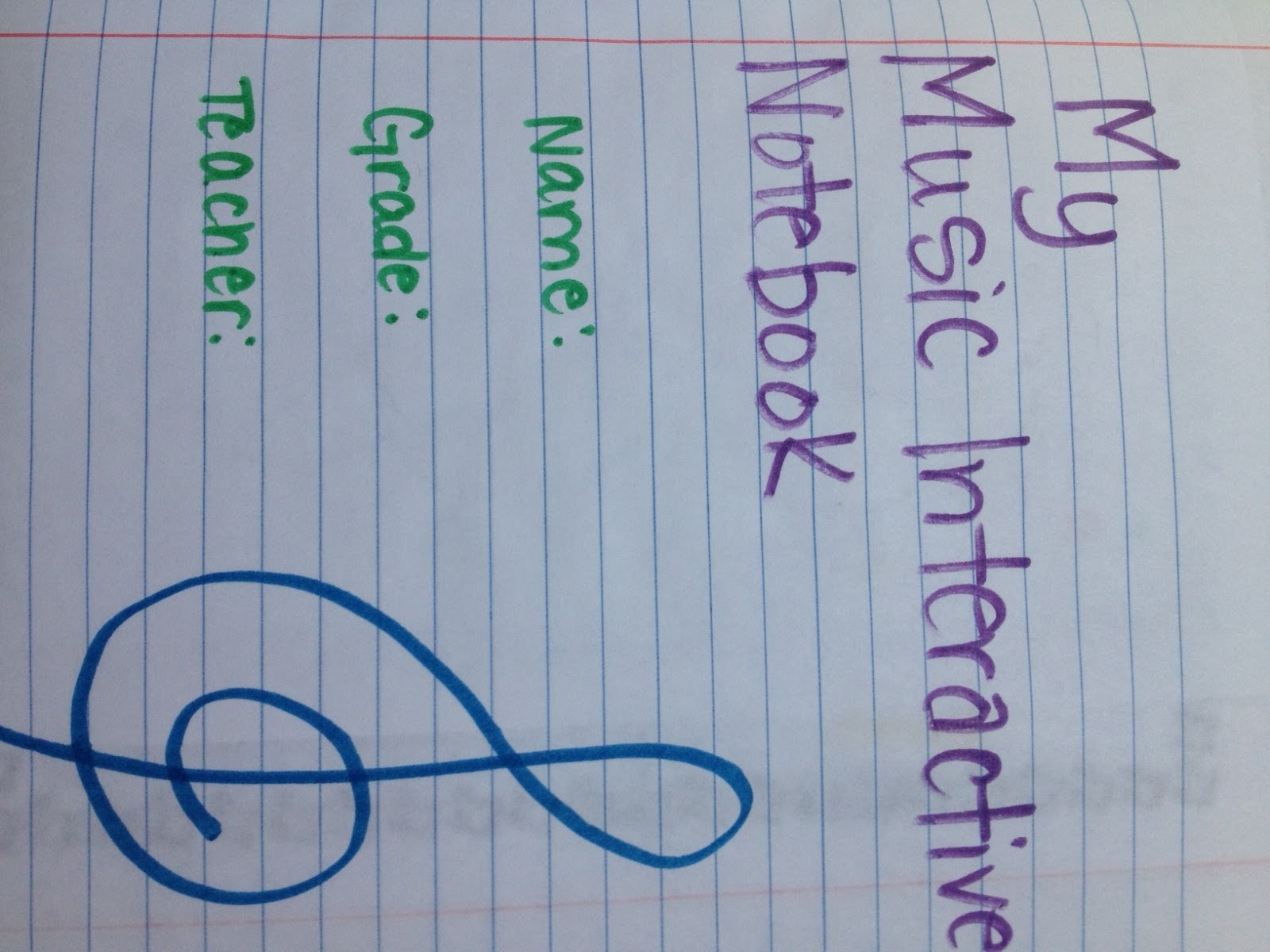
Here's the title-page for our notebooks. I let the students decorate it themselves, as long as what they draw is music-related. I set a time limit of 10 minutes for this activity and I usually multi-task by playing a song we're learning or will learn, or have learned, or will listen to, etc, while they complete this task.
This sheet includes the musical vocabulary the students will learn over the first nine-weeks. Words highlighted in yellow are words the students are learning/have learned. At the end of the first nine weeks, the students put a green dot next to words they are sure they know, and a red dot next to words they are unsure of this. This gives me the opportunity to see what we need to revisit or relearn. Vocabulary words are posted on the word wall and on the "vocabulary wall" which is a large pocket chart (I forgot to take a picture of this but I will post it soon - it is very effective).
Here are some rhythm pages for 3rd grade. In addition to basic rhythms (whole note/rest, half note/rest, quarter note/rest, eighth notes and sixteenth notes), my 3rd graders also learn the dotted half note, tika-ti (2 sixteenths, one eighth), and ti-tika (1 eighth, 2 sixteenths). I usually also touch on syn-co-pa (eighth quarter eighth) and tam-ti (dotted quarter eighth) because these rhythms are common in some of the recorder and choral music we do.
I'll also be including some rhythm practice pages and a few rhythm composition activities that the students will glue in.
Here are a few melodic-based pages.
I like the music street printable. Students fill in the solfa as we learn them. Some students can use the floor staff, while others track the movement in their notebooks (as we discuss steps, skips, and leaps).
I also plan to include some sight-reading practice pages (more soon).
Students can also log listening experiences. I like to include these basic vocabulary pages so students can refer to them.
And short assignments, like the ones described in 3rd Grade Listening Recommendations , can also be logged here.
Two years ago, I had a moderate obsession with foldables. I'm currently "researching" (and by that, I mean browsing Pinterest) to see which foldables to incorporate in the interactive notebook.
See what I mean? Obsessed. This year, I've already created one new foldable:
I love it because it was so simple to create (just print, cut out the square for the students). I'm thinking we could use a few of these as we study composers.
That's about all I have for right now. I'll update soon!
https://www.teacherspayteachers.com/Product/Music-Interactive-Notebook-Pages-Rhythms-475383
https://www.teacherspayteachers.com/Product/Music-Interactive-Notebook-Pages-Dynamics-Tempos-Articulations-424104
Several of my wonderful readers have asked/emailed about how I use interactive notebooks in the music room. Hopefully this post can help you, in case you decide to use them in your own classroom.
Let me caution you - This is only my 2nd year using them. I decided to "give it one more go" before I pass judgement on the idea as a whole. Last year, I used them often in the first semester, but they somewhat "fizzled" out in the second - I even decided to keep my 5th graders notebooks and recycle them for third this year.
Pros - I like the idea of having a place for students to log what they've learned, reflect on what they've heard, and post assignments and compositions, not to mention something they can take with them when they go on to middle school. The students have been positive about using the notebooks and seem to enjoy them.
Cons - I do not like the 1) time it takes to use the notebooks and, honestly, the 2) time it takes for me to create things to go inside the notebooks (Have you seen your average 3rd grader make a foldable? Eeek), 3) the cost (or acquisition) of materials (makers, pens, glue, paper, and the notebooks themselves).
Some basics:
* I only use notebooks with grades 3-5. You might just pick one or two grades to "try it out".
* Find a convenient place to store them and an efficient way to pass them out/clean them up. I store them on a bookshelf by homeroom teacher. On the cover, I've written the student's name, grade, and teacher in permanent marker. I color-code (using a marker dot or sticker) each journal based on where the student sits (if they sit on the red risers, they have a red dot, etc). Journals can be passed out quickly during our normal greeting/warm-up routine.
* Create a sense of "ownership" for the students - praise their good work, allow them to share with others, ask to use theirs as "model" for other classes/grades, put a cute sticker on a particularly worthy assignment
* Create meaningful assignments that are aligned with your curriculum. For me, this is why so much of my notebook is a "work in progress". I've had to "grow" my curriculum with my students. This is my 3rd year with them, and it is the first year that I've though, "Whew, they are pretty much on-pace with where they should be."
* Keep it simple - If I can use the large paper-cutter to crop a worksheet, rather than hand 25 scissors to 3rd graders, I'll do myself, thanks. If it will take me twenty minutes to fold 20 foldables when it would take a 4th grader 20 minutes to fold 1, I'll do it. If I can glue in a page and spare 30 glue-bottles from the fingers of 30 5th graders, I'll do that too. See what I mean about cons (taking a lot of your time)?
* If you want to have an organized notebook (a section for rhythm, a section for melodies, etc), you'll need to plan out nearly all the components ahead of time. I do a basic "notebook" planning page per nine weeks, where I list things I want to create or have the students create to put in their notebooks. Then, I simply have the students enter in notes and assignments as we complete them. Many teachers have their student's notebooks number by page (i.e. pages 20-35 are rhythmic pages), but those teachers are usually teaching only one classroom of students, not multiple classes and grade levels.
Anyway, here are a few pages from my current 3rd grade "model" notebook. We'll begin working in our notebooks next week (fingers crossed).
Here's the title-page for our notebooks. I let the students decorate it themselves, as long as what they draw is music-related. I set a time limit of 10 minutes for this activity and I usually multi-task by playing a song we're learning or will learn, or have learned, or will listen to, etc, while they complete this task.
This sheet includes the musical vocabulary the students will learn over the first nine-weeks. Words highlighted in yellow are words the students are learning/have learned. At the end of the first nine weeks, the students put a green dot next to words they are sure they know, and a red dot next to words they are unsure of this. This gives me the opportunity to see what we need to revisit or relearn. Vocabulary words are posted on the word wall and on the "vocabulary wall" which is a large pocket chart (I forgot to take a picture of this but I will post it soon - it is very effective).
This little page is quite interactive. The students illustrate each vocabulary word. We use these words ALL the time (they are also on the word wall and currently on the vocabulary wall as we are reviewing them).
| One Beat Rhythms |
| Two Beat Rhythms |
| Four Beat Rhythms |
I'll also be including some rhythm practice pages and a few rhythm composition activities that the students will glue in.
Here are a few melodic-based pages.
| Melodic Shape Activity |
| Melodic Vocabulary with Illustrations |
| Do Re Mi Song Activity |
| Treble Clef - corresponds to boomwhacker colors |
![]() |
| Music Street |
I also plan to include some sight-reading practice pages (more soon).
Students can also log listening experiences. I like to include these basic vocabulary pages so students can refer to them.
And short assignments, like the ones described in 3rd Grade Listening Recommendations , can also be logged here.
![]() |
| Listening Recommendations |
![]() |
| Exploration Report |
Two years ago, I had a moderate obsession with foldables. I'm currently "researching" (and by that, I mean browsing Pinterest) to see which foldables to incorporate in the interactive notebook.
![]() |
| Love this book! |
![]() |
| Orchestral Instruments Foldable |
![]() |
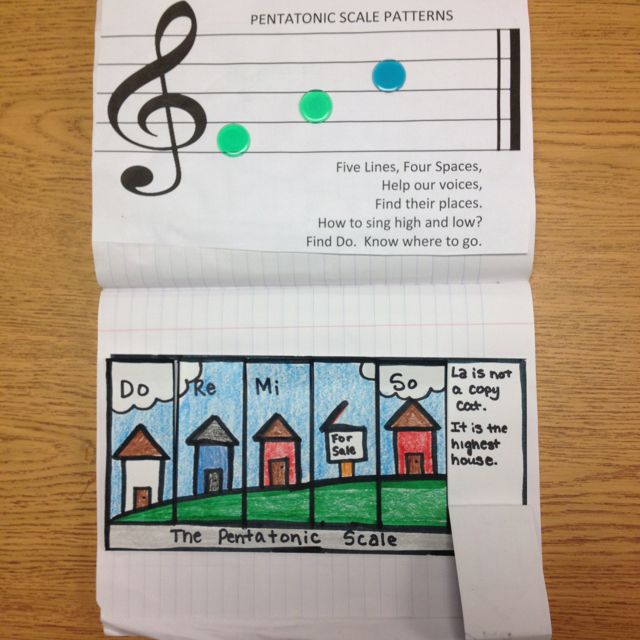
| Pentatonic Page from previous notebooks |
![]() |
| Recorder Fingerings Foldable |
![]() |
| Rhythm Value Look Book - I'll probably use this again |
I love it because it was so simple to create (just print, cut out the square for the students). I'm thinking we could use a few of these as we study composers.
That's about all I have for right now. I'll update soon!
Subscribe to:
Posts (Atom)


.png)
.png)
.png)
.png)
.png)
.png)
.png)
.bmp)
.png)
.png)
.png)
.png)
.bmp)
.bmp)
.bmp)
.bmp)
.bmp)